Have you heard of the saying “Plan your work and work your plan?” I’m sure you have. This philosophy has time and again proven to be extremely efficient.
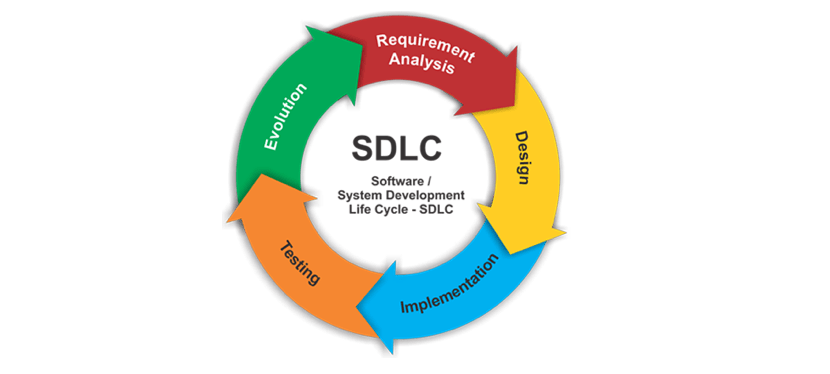
What is SDLC and which SDLC model is the best for your business? The software development life cycle process is broken down into steps (generally 6-8 steps): Planning, Requirements, Design, Development, Test, Deploy and Maintain.
However, the steps involved can be combined or omitted based on the project scope. Having said that, These are the core components recommended for all software development projects.
The software development life cycle helps improve and measures the entire software development process by enabling step by step analysis of the process. Using SDLC Models, especially the Agile SDLC model for software development, businesses can increase efficiency at every step.
Moreover, SDLC also helps companies reduce costs, meet customer needs, and facilitates quick software delivery to help projects run smoothly. So then, which SDLC model is the best for you?
SDLC Models
Based on your market, project context, and business requirements, you can decide which SDLC model is the best for your business.
Waterfall Model
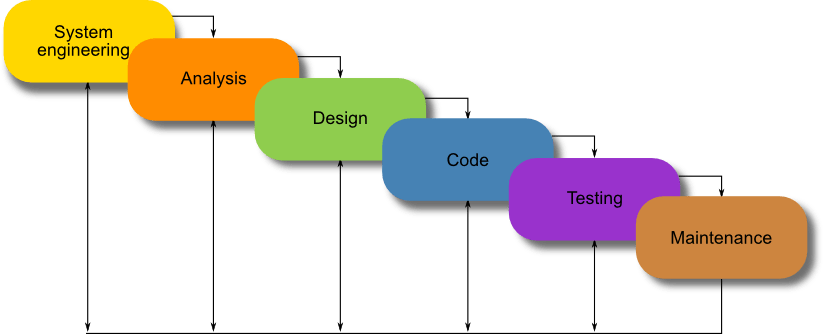
The waterfall is the first-ever, simplest, and one of the best SDLC methodology in the history of software development. The process of development in this model is linear and all the phases are completed one by one. As the name implies, like a waterfall, the progress of development flows downwards.
Phases of the Waterfall model:
- Requirements
- Design
- Implementation
- Integration and testing
- Deployment
- Maintenance
Note – The Waterfall model does not permit going back to previous stages of development to rectify or implement changes. The only way to do that is to do it in the next Waterfall iteration.
Benefits:
- The waterfall model is easy to explain (for clients and the developers)
- Well defined development stages
- Easy and efficient planning
- One by one phase completion
- Easy to verify errors
- Well documented process
Best For:
- Stable requirements
- Products with a clear vision
- Quick development
V-Shaped Model
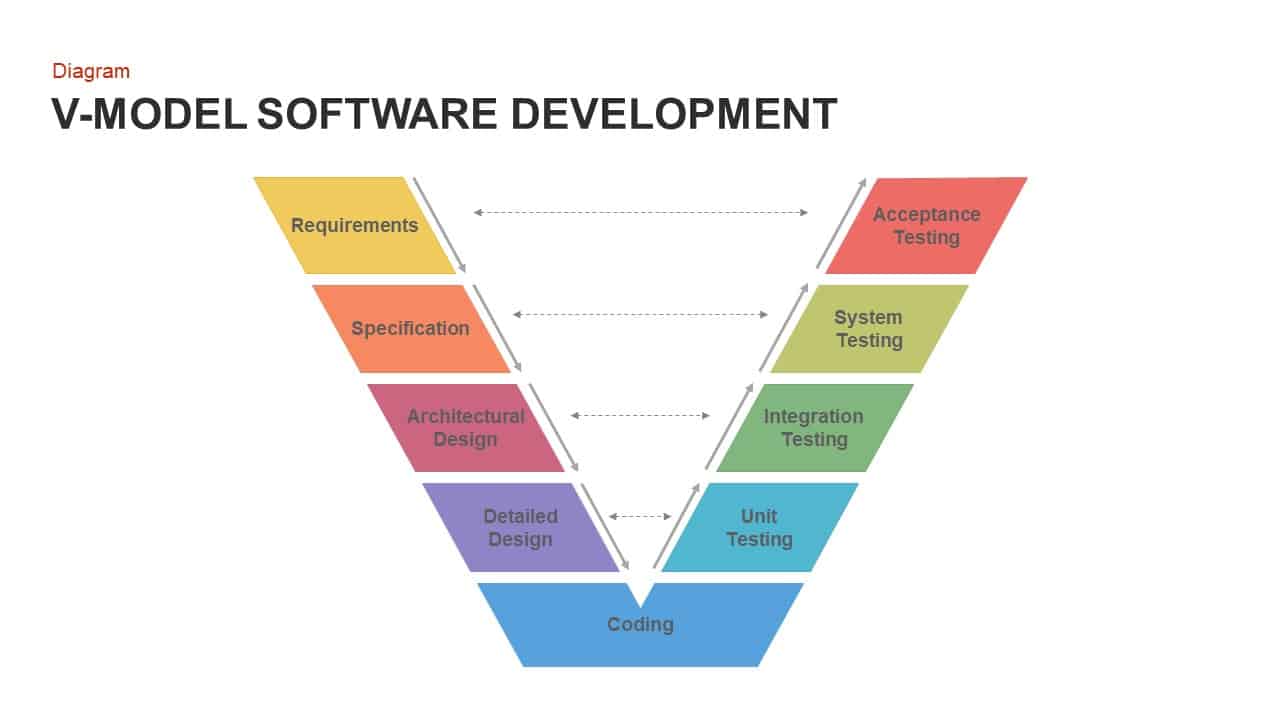
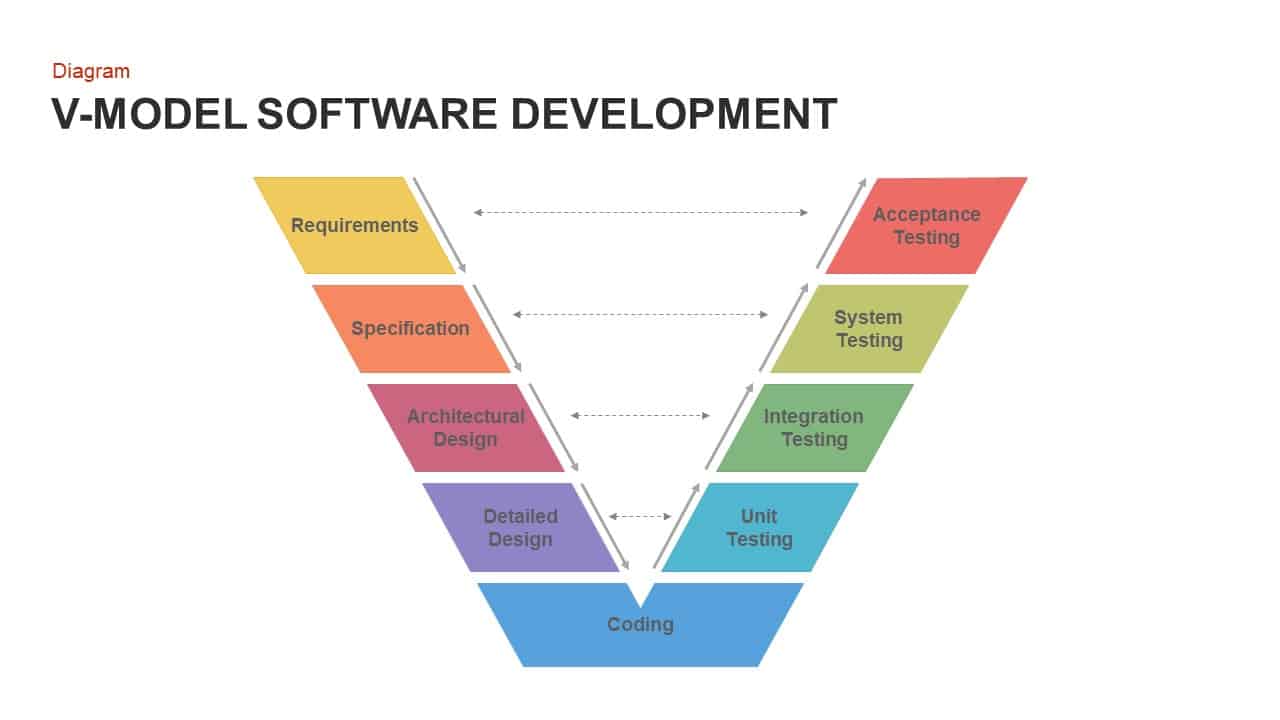
The V-Model, also known as the validation model is essentially a further extension of the waterfall model approach and is also considered to be amongst the best SDLC methodology. In this model, the progress doesn’t move in a straight line but rises upwards after coding and implementation.
For the V model SDLC projects, early test planning is common. This is one of the primary differences between the V-model and the waterfall model.
In a V-Model, with every development process, there is a simultaneous testing process that helps verify and validate every step before leaping forward to the next step.
Benefits:
- Easy to use
- Clearly laid out deliverables
- Better results because of early testing
- Every stage is validated
- Smooth and efficient bug fixing
- Easy progress tracking
Note – The V-Model is good for similar types of projects as Waterfall.
Big Bang Model
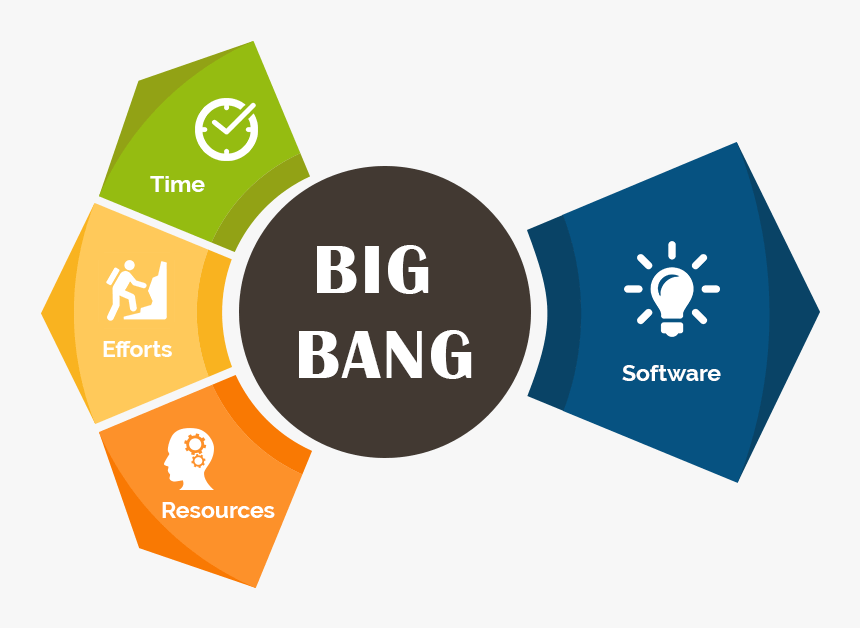
The Big Bang SDLC model doesn’t have a typically following structure or a set of instructions. In such a cycle, the development begins with the resources in hand and efforts available at the moment.
This isn’t a very popular SLDC as an unplanned development cycle might lead to a product that may or may not meet the customer needs.
The fundamental idea of the Big Bang SDLC is to allocate available resources for the software development process, majorly in terms of coding. When we talk about the best SDLC methodology, we cannot omit the big bang SDLC model.
Benefits:
- Easy to implement the model
- Minimum or no planning needed
- Easily manageable
- Requires limited resources
- Flexible for developers
Iterative and Incremental model
Best For:
- Projects that require small teams
- eLearning projects
- Projects with no certain requirements
- Low-risk and small projects
Iterative and Incremental Model
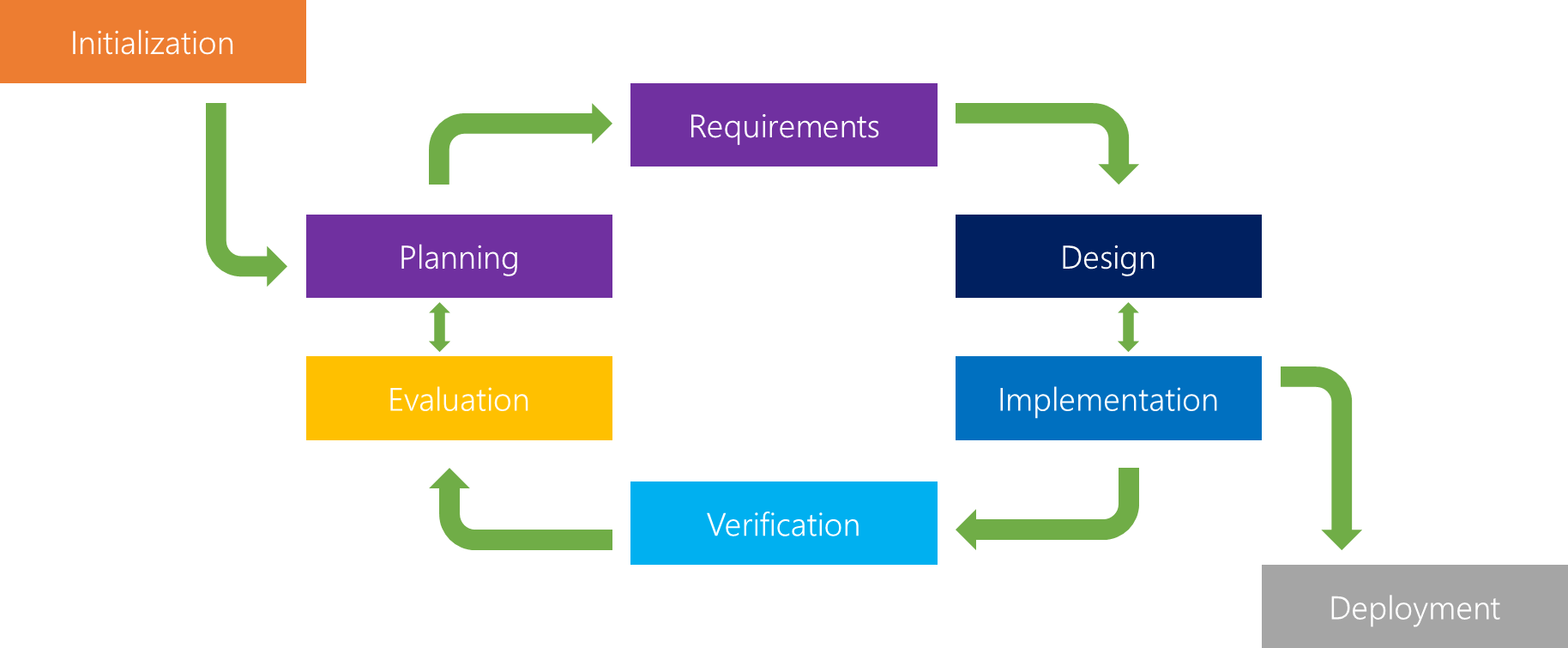
This Iterative and Incremental SDLC model essentially brings together an iterative design with an incremental development model which makes it amongst the best SDLC methodology for business.
In such a model, the teams working on the project work on the product in cycles by working on parts.
The process of development in such a model begins with the simple implementation of basic product requirements. As and when the product keeps building, the product is worked on and enhanced to a more complete version of itself.
One of the most prominent features of this model is the fact that one can begin the development process without really knowing the requirements. The iterative and incremental SDLC model, in other words, looks like a set of Mini Waterfall/V-Shaped models.
Benefits:
- Produces quick value for the business
- Need limited resources
- Flexible model
- Facilitates early bug detection
- Easy
Best For:
- Complicated projects like ERP systems
- Development Projects with strict requirements
- Projects with well-defined requirements
- Development Projects where the required technology is new
- Products with high-risk features
RAD Model
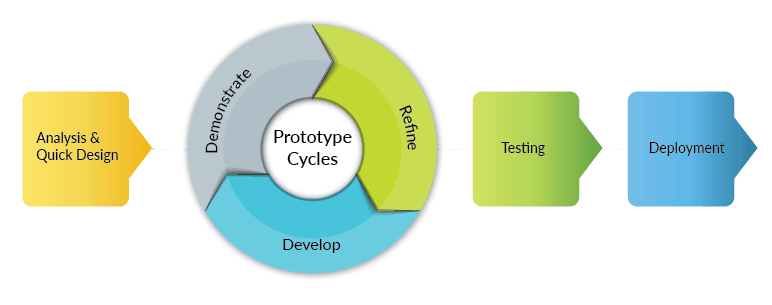
The RAD (Rapid Application Development) Model is based on the combination of iterative and prototyping model and has no or minimum planning involved. RAD is again amongst the best SDLC methodology for business. The required primary data in this model is curated through workshops, focus groups, and prototypes.
The functional modules in the RAD model essentially build parallelly to the prototype and are then integrated to come up with the final product quickly. This SDLC analysis designs the software, build and test phases into a series of short, iterative development cycles.
RAD Model Phases
Business Modeling
This model keeps a check on the information flow and information circulation between various channels.
Business modeling is essential to identify important business information, how can it be obtained, how to process the information, and what are the factors that are driving the information flow.
Data Modeling
In this phase, the data is processed from the previous phase to form the required datasets and it’s attributes.
Process Modeling
The information collected from Data modeling is processed further to achieve business goals along with providing descriptions for adding, deleting, retrieving, or modifying every data object.
Testing & Turnover
Most of the prototypes are tested unanimously during iteration. The developers only test the flow of data and the interfaces between all components.
Benefits
- Accommodates changing requirements
- Easy to measure progress
- Reduce iteration time with powerful RAD tools
- Higher productivity
- Quick development
- Reusable components
- Better chance to get customer feedback
Best For:
- Modularized systems
- Design-based projects
- Projects with automated code generating functionality
- Projects with changing requirements
Agile Model
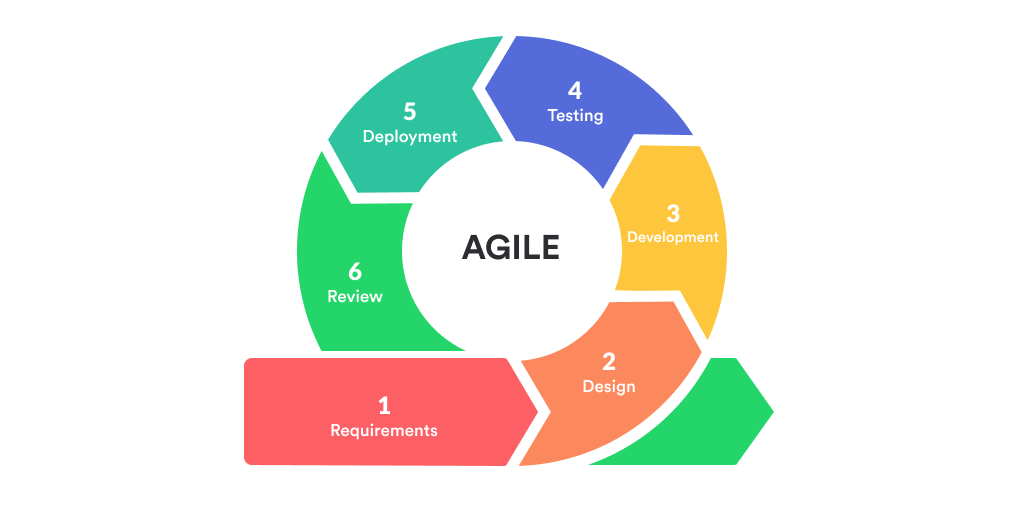
The answer to the question “which SDLC model is the best?” is Agile. The Agile model is a combination of an incremental and iterative approach and is focussed on fitting in well with flexible requirements.
The project requirements and the solutions in Agile projects keep evolving during the development process making it one of the best SDLC methodology for business.
In an agile method of software development, the project is divided into small subparts and is delivered in iterations. The subtasks are divided into time frames to serve working functionality with each build. As a result, the final product has all the required features.
In an agile model, the already existing development approach needs to be adapted to every project’s requirements.
Benefits:
- Quick development
- Quality and measurable results
- Business value can be delivered – demonstrated fast
- Requires minimum resources
- Highly adaptive to changing requirements
Why Agile?
Agile is the best SDLC methodology and also one of the most used SDLC in the tech industry as per the annual State of Agile report. At RnF Technologies, Agile is the most loved software development life cycle model. Here’s why.
Agile is extremely adaptive which makes it different from all other SDLC. Other SDLCs are predictive and are dependent on proper planning, requirements, and analysis which makes implementations of changes difficult in them.
Modern software development must facilitate making changes immediately. The Adaptive agile model doesn’t require detailed planning like other predictive methodologies. If one needs to make a change, it can be done in the same sprint.
A feature-driven development team can adapt to changes in requirements dynamically. Also, the frequency of tests in Agile helps to minimize the risk of major failures.
Of course, Agile means a lot of client and user interaction to work properly. The needs of the user, not the client, define the final project requirements.
Best For:
- Any project with a lot of engagement from the client
- Projects with a frequently changing environment
- Quick functionality implementation – within 3 weeks
Final Thoughts
Now that you know the main what different SDLCs are and which SDLC model is the best for your project requirements, it is time to make your decision. Makes sure you take a call only after your team is sure that the project will benefit
At the end of the development cycle, you want a product that is beneficial for your users and a product that would help you establish your business. Agile development is a consumer-focused approach and creates the best working software!
Agile SDLC is a great solution for startups as well as enterprises. The market is highly competitive and you can score big success only if you stay open to customer feedback, flexible, and ready to fundamentally change the path for your project.
RNF Technologies is one of the top software development companies and our team of Web and Mobile App developers are well versed with Scrum and Kanban to build custom agile software solutions for clients.
Got a project in mind? Why not test our skills? We can help you build custom software and mobile app solutions for your business. Let’s discuss it!